RSS Schisms, Apple Control, and Spotify Land Grabs: The Never-Ending Standards War Behind Podcasting
From the birth of RSS and the split between RSS 1.0, RSS 2.0, and Atom, to Apple’s namespace rule and the revival of Podcasting 2.0, this long read explains how podcast RSS became the open infrastructure behind modern audio.
Compiled and written by: Gavin Chen
In an era dominated by streaming media and algorithmic recommendations, podcasts stubbornly adhere to an ancient, open technological core: RSS (Really Simple Syndication). When you subscribe to a show via Apple Podcasts, Pocket Casts, or Spotify, the silent engine working behind the scenes is a series of XML code containing the show's metadata.
But have you ever wondered why the RSS formats output by different platforms vary so wildly? Some are filled with itunes: tags, others are mixed with content:encoded, and some even employ podcast:transcript. Behind this seemingly mundane technical detail lies a saga spanning more than two decades—a story of geek rivalries, corporate maneuvering, and an ongoing crusade for the "open web."
Today, we embark on an in-depth archaeological journey from a hacker's perspective. We will trace the origins of the podcast RSS feed, examining how it evolved from a late-1990s geek toy into the foundational infrastructure of a massive audio industry. This is not merely a technical history; it is a human epic about idealism versus commercial reality, open systems versus walled gardens, and individual heroism versus collective collaboration.
This article is also published on the author's personal WeChat Official Account and X account. Feel free to follow.
WeChat Official Account: 小陈的科技日常
Personal X account: GavinC
For reposting, quotations, or collaboration inquiries, feel free to contact the author via this site, WeChat Official Account messages, or X direct messages.
Chapter 1: Primordial Chaos: The Origins of RSS and the Netscape Portal Wars (1997–1999)
To understand the underlying DNA of the podcast RSS feed, we must first travel back to Silicon Valley in 1998.
The internet was in its early "portal website" era. Netscape, the former browser hegemon, was facing a brutal war of attrition from Microsoft's Internet Explorer. When Netscape went public in 1995, its browser commanded over 80% of the market; by 1998, that share had been drastically eroded by Microsoft.
Seeking a new path forward, Netscape decided to build its own portal platform, My.Netscape.Com, to compete with giants like Yahoo and MSN. This conflict, known in the industry as the "portal wars," unexpectedly gave birth to one of the most important technical standards in internet history.
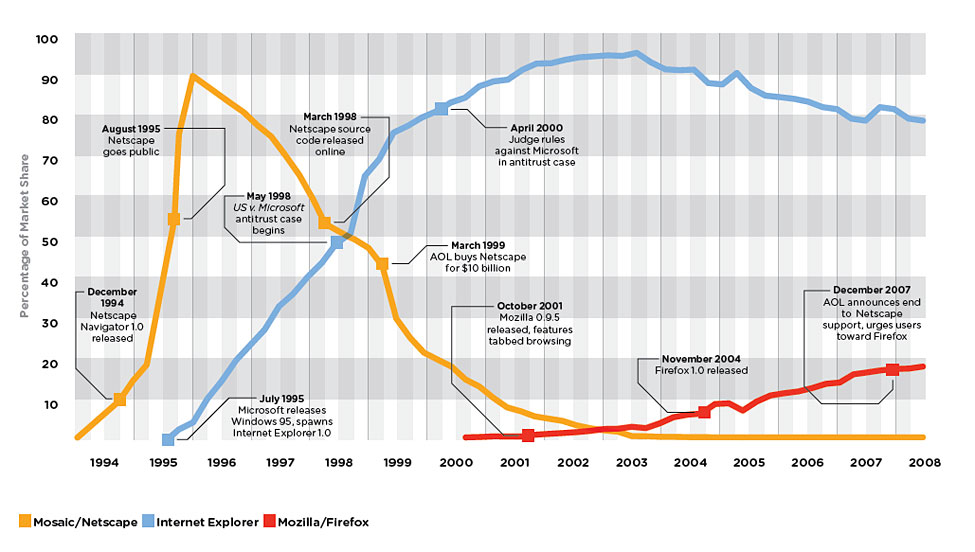 Source: wired
1.1 Apple's Legacy: Guha and the Meta Content Framework
Before we can understand the birth of RSS, we must meet a key figure: Ramanathan V. Guha (R.V. Guha).
Guha, an Indian-born computer scientist, previously worked at Apple's Advanced Technology Group (ATG). There, he developed a system called the Meta Content Framework (MCF), a metadata format designed to describe the relationships between web pages and files. He even built a visualizer called HotSauce that could render these relationships as a three-dimensional network of nodes—a concept that felt like science fiction in 1996.
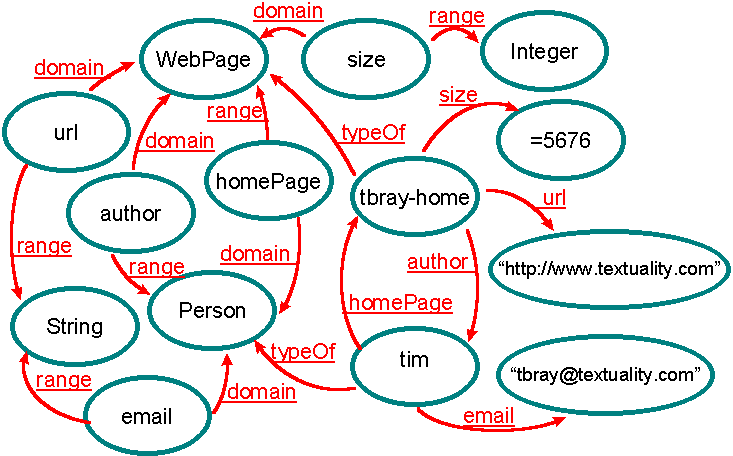 Source: w3.org - An MCF Tutorial
However, Apple axed the research project in 1997. Guha subsequently jumped ship to Netscape, taking his obsession with MCF and metadata with him to begin a new journey.
At Netscape, Guha collaborated with Tim Bray, co-founder of the XML standard, to adapt MCF into an XML-based version. They submitted this to the W3C as the foundation for the RDF (Resource Description Framework) standard. RDF was immensely ambitious: it sought to build a "Semantic Web" where machines could understand the meaning of web content, rather than merely displaying text.
1.2 Netscape's "Project 60" and the Birth of RSS 0.90
In 1998, AOL announced its acquisition of Netscape. Before the dust settled on this buyout, engineers within Netscape were frantically pushing forward a portal project codenamed "Project 60."
Guha and fellow engineer Dan Libby, both working on the project, proposed a concept: what if there was a standard format that allowed other websites to send over their latest article titles and links? Users could then customize their own "news channels" on their My.Netscape page. This idea was the prototype for RSS.
In March 1999, Netscape officially launched the feature and published the first version of the RSS specification: RSS 0.90. At the time, the acronym stood for RDF Site Summary [1].
However, the "RDF" moniker was somewhat misleading. Pressed for time, Guha and Libby did not actually utilize any true RDF syntax in RSS 0.90. Dan Libby later admitted that naming it "RDF Site Summary" was more of a political calculation—designed to align RSS with the W3C's standardization efforts rather than serving genuine technical needs.
The structure of RSS 0.90 was extremely simple. A typical file looked like this:
<?xml version="1.0"?>
<rdf:RDF xmlns:rdf="http://www.w3.org/1999/02/22-rdf-syntax-ns#"
         xmlns="http://my.netscape.com/rdf/simple/0.9/">
  <channel>
    <title>My Netscape News</title>
    <link>http://www.my.netscape.com</link>
    <description>The best news on the web.</description>
  </channel>
  <item>
    <title>Breaking News</title>
    <link>http://www.my.netscape.com/news/breaking</link>
  </item>
</rdf:RDF>
It was that basic. It could only contain titles and links, lacking even the capacity for article summaries. Yet, this primitive format inaugurated the era of internet content syndication.
1.3 Dave Winer Enters the Fray: The Geek Meets the Giant
Just as Netscape was releasing RSS 0.90, another Silicon Valley legend was driving a different revolution: the Weblog.
Dave Winer, born in 1955 in Queens, New York, was the son of a Columbia University business professor and a school psychologist. He graduated with a mathematics degree from Tulane University and later earned a master's in computer science from the University of Wisconsin-Madison. In 1979, he joined Personal Software (the company behind VisiCalc), beginning his software development career [2].

Winer was a brilliant but controversial figure. Known for his fiery temper, he frequently used his blog, Scripting News, to lambast Apple and Microsoft. Yet, he was also a pioneer of outliner software and content management systems. His company, Living Videotext, developed outliners like ThinkTank and MORE, which became wildly popular on the Mac platform in the 1980s. He eventually sold the company to Symantec for a handsome sum, achieving financial freedom.
In 1988, Winer founded UserLand Software, focusing on scripting languages for the Mac. During the 1994 San Francisco newspaper strike, he helped workers launch an online newspaper, sparking his fascination with web publishing. In February 1997, he launched Scripting News, one of the longest-running blogs on the internet, which continues to be updated today.
As early as December 1997, Winer had designed an XML format for his blog (the Scripting News format) so that other programs could read his posts. This predated Netscape's RSS 0.90 by more than a year.
When Netscape released RSS 0.90, Dave Winer astutely recognized its potential, but he was also dissatisfied with its limitations. RSS 0.90 could only contain titles and links, whereas Winer believed that blogs needed the ability to transmit full paragraphs. He publicly called Netscape's format "woefully inadequate" and stated it was "missing the key thing web writers and readers need" [3].
Winer attempted to lobby Netscape to improve RSS but was largely ignored. Consequently, in June 1999, he introduced his own ScriptingNews 2.0b1 format—which he nicknamed the "fat" syndication format because it could include entire paragraphs rather than just links.
Faced with Winer's challenge, Netscape capitulated merely a month later, releasing RSS 0.91. This version represented a massive about-face: Netscape completely abandoned the complex RDF, incorporated numerous elements from Winer's format, and changed the acronym to stand for Rich Site Summary [4].
In the text of the new specification, Dan Libby explicitly explained the pivot:
"RDF references removed. RSS was originally conceived as a metadata format providing a summary of a website. Two things have become clear: the first is that providers want more of a syndication format than a metadata format. The structure of an RDF file is very precise and must conform to the RDF data model in order to be valid. This is not easily human-understandable and can make it difficult to create useful RDF files. The second is that few tools are available for RDF generation, validation and processing. For these reasons, we have decided to go with a standard XML approach." [5]
Dave Winer was enormously pleased with RSS 0.91, calling it "even better than I thought it would be." He announced that UserLand would fully support it. A brief peace descended.
1.4 Netscape's Exit and the Power Vacuum
However, the good times did not last. As AOL finalized its acquisition and executed massive restructuring, the My.Netscape portal completely removed support for RSS in its April 2001 redesign. Netscape even deleted the DTD (Document Type Definition) file for RSS 0.91 from its servers, causing many RSS parsers that relied on it for XML validation to suddenly fail [6].
Netscape had washed its hands of the project, but RSS had already caught fire in the blogging community. Who would take stewardship of the standard? A multi-year "RSS split war" was about to begin.
Chapter 2: Clash of the Titans: The RSS Split and the Birth of Atom (2000–2005)
Netscape's exit left a massive power vacuum in the RSS community. Two factions quickly moved to fill it, igniting a protracted battle over standards.
2.1 The Formation of the RSS-DEV Working Group
On one side was the RSS-DEV Working Group, a coalition of developers passionate about the "Semantic Web." Spearheaded by Rael Dornfest (CTO of O'Reilly Network), the group included figures like Ian Davis and Guha.
They believed that RSS 0.91 was too primitive and that RDF had to be reintroduced to give RSS the capacity to describe complex metadata. Their goal was to forge RSS into a genuine Semantic Web tool, not just a simple news syndication format.
Among this group was a 14-year-old prodigy named Aaron Swartz.
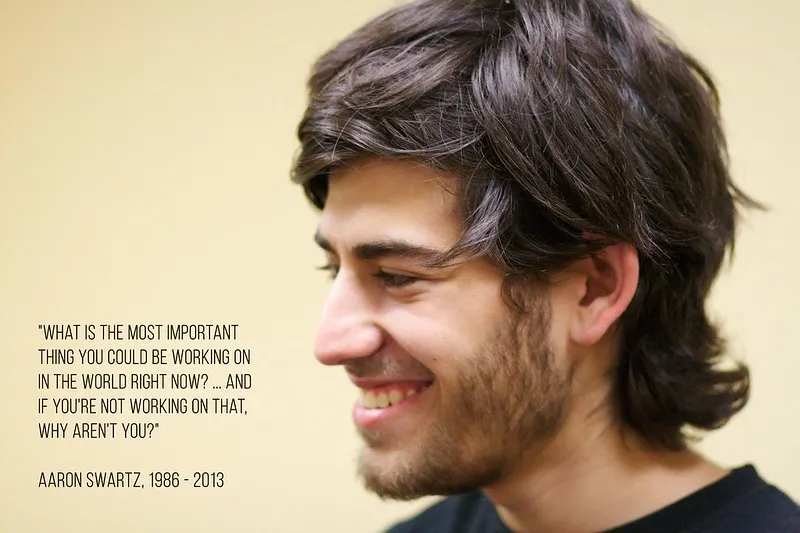
Born on November 8, 1986, in Highland Park, Illinois, Aaron Swartz showed astonishing aptitude for computers and the internet from a young age. At 12, he created a user-generated encyclopedia website (predating Wikipedia by two years), earning him the ArsDigita Prize [7].
At 14, Swartz joined the RSS-DEV Working Group and became one of the core authors of the RSS 1.0 specification. At an age when most people are struggling with high school math, he was helping draft foundational internet standards.
In December 2000, the RSS-DEV Working Group published RSS 1.0. This version was entirely based on RDF. It introduced modularity and namespaces, allowing functionality to be extended via external vocabularies (such as the Dublin Core and Content modules).
The structure of RSS 1.0 was significantly more complex than RSS 0.91:
<?xml version="1.0" encoding="UTF-8"?>
<rdf:RDF
  xmlns:rdf="http://www.w3.org/1999/02/22-rdf-syntax-ns#"
  xmlns="http://purl.org/rss/1.0/"
  xmlns:dc="http://purl.org/dc/elements/1.1/"
  xmlns:content="http://purl.org/rss/1.0/modules/content/"
>
  <channel rdf:about="http://www.example.com/rss">
    <title>Example Channel</title>
    <link>http://www.example.com</link>
    <description>An example RSS 1.0 feed</description>
    <dc:creator>John Doe</dc:creator>
    <items>
      <rdf:Seq>
        <rdf:li rdf:resource="http://www.example.com/article1"/>
      </rdf:Seq>
    </items>
  </channel>
  <item rdf:about="http://www.example.com/article1">
    <title>Article One</title>
    <link>http://www.example.com/article1</link>
    <description>A short description.</description>
    <content:encoded><![CDATA[<p>Full HTML content here.</p>]]></content:encoded>
  </item>
</rdf:RDF>
As you can see, RSS 1.0 introduced namespace extensions like dc:creator (Dublin Core author) and content:encoded (full HTML content)—tags that remain widely used in podcast RSS feeds today.
2.2 Dave Winer Strikes Back: Really Simple Syndication
On the other side stood Dave Winer. He vehemently opposed the reintroduction of complex RDF, arguing that the core value of RSS lay in its "simplicity." A mere 19 days after the release of RSS 1.0, Winer published RSS 0.92 on the UserLand website.
Over the next two years, leveraging the market dominance of his blogging software, Winer iteratively updated his version of RSS: 0.92, 0.93, 0.94... Each version featured minor improvements, but all adhered strictly to the core principle of simplicity.
In September 2002, Winer released the landmark RSS 2.0, bestowing upon it the name by which it is most widely known today: Really Simple Syndication [8].
The structure of RSS 2.0 was clear and concise:
<?xml version="1.0" encoding="UTF-8"?>
<rss version="2.0">
  <channel>
    <title>Example Podcast</title>
    <link>http://www.example.com</link>
    <description>An example podcast feed</description>
    <language>en-us</language>
    <pubDate>Mon, 01 Jan 2024 00:00:00 GMT</pubDate>
    <item>
      <title>Episode 1: Getting Started</title>
      <link>http://www.example.com/episode1</link>
      <description>In this episode, we discuss...</description>
      <pubDate>Mon, 01 Jan 2024 00:00:00 GMT</pubDate>
      <enclosure url="http://www.example.com/ep1.mp3" length="12345678" type="audio/mpeg"/>
      <guid>http://www.example.com/episode1</guid>
    </item>
  </channel>
</rss>
RSS 2.0's greatest contribution was retaining a simple XML structure while simultaneously introducing a namespace mechanism. This acted like a "plugin interface" for RSS, allowing anyone to extend its functionality via custom tags without altering the core specification.
In July 2003, Winer transferred the copyright of RSS 2.0 to Harvard University's Berkman Center for Internet & Society (where he was a fellow at the time) and declared the specification "frozen," stipulating that "no significant changes can be made" [9].
This decision sparked massive controversy. Supporters argued that freezing the spec guaranteed stability, preventing endless iteration. Detractors viewed it as Winer using Harvard's authority to block community improvements, labeling it "technological hegemony."
2.3 The Mailing List Wars: A Protracted War of Words
During the years that RSS 1.0 and RSS 2.0 developed in parallel, the debate between the two camps never ceased.
The main battlefield was a public discussion group known as the Syndication mailing list. Here, developers, bloggers, and tech enthusiasts from around the globe engaged in fierce debates over the future of RSS.
Dave Winer was one of the most active—and polarizing—participants on this list. His style was direct, uncompromising, and sometimes abrasive. He frequently criticized members of the RSS 1.0 camp, dismissing their proposals as overly complex and detached from reality. Anticipating the split, Winer wrote to the mailing list:
"I'm still pondering how to move RSS forward. I definitely want ICE-like stuff in RSS2, publish and subscribe is at the top of my list, but I am going to fight tooth and nail for simplicity. I love optional elements. I don't want to go down the namespaces and schema road, or try to make it a dialect of RDF. I understand other people want to do this, and therefore I guess we're going to get a fork." [10]
The RSS 1.0 camp fired back, arguing that Winer's RSS 2.0 was a poor technical decision lacking rigorous specification, which led to widespread incompatibility among different implementations.
This debate was more than a technical disagreement; it was a collision of two fundamentally different internet philosophies:
- Pragmatism: RSS should be simple enough for anyone to understand and implement, even if it sacrifices technical rigor.
- Academicism: RSS should be built on strict standards, even if it entails a steeper learning curve.
2.4 Starting Fresh: The Rise of Atom
Because RSS 2.0 was "frozen" and Winer's aggressive tactics had alienated many developers, a group within the community decided to jettison the historical baggage of RSS entirely and design a more rigorous, modern syndication format from scratch.
In June 2003, IBM engineer Sam Ruby set up a wiki to discuss "what makes a well-formed log entry." This initiative unexpectedly became a rallying point, attracting a massive response from developers [11].
Initially called Echo, then Pie, and Necho, the new format was ultimately named Atom. Contributors included internet elites like Mena Trott (co-founder of Six Apart), Brad Fitzpatrick (founder of LiveJournal), Jason Shellen (Blogger engineer), and Jeremy Zawodny (Yahoo engineer). Even Dave Winer briefly offered "tentative support" for the project, though he later withdrew it.
Atom's design goals, outlined in its project road map, were explicit:
- "100% vendor neutral"
- "implemented by everybody"
- "freely extensible by anybody"
- "cleanly and thoroughly specified" [12]
In 2005, the IETF officially published Atom as the RFC 4287 standard. Compared to RSS 2.0, Atom boasted several significant improvements:
- Mandatory
<id>element: Every entry required a globally unique identifier, resolving the chaos caused by the optional<guid>in RSS. - Explicit timestamp semantics: It differentiated between creation time (
<published>) and update time (<updated>), whereas RSS only had a vague<pubDate>. - Built-in content type declarations: It could explicitly declare whether content was plain text, HTML, or XHTML, eliminating the need for namespace extensions like
<content:encoded>.
At this point, the syndication landscape was split three ways: the academic RSS 1.0 (RDF-based), the pragmatic RSS 2.0 (Winer's legacy), and the modern Atom (IETF standard).
Although Atom was technically superior, RSS 2.0 had already secured a massive first-mover advantage. Ultimately, in the realm of podcasting, RSS 2.0 became the absolute mainstream. Atom didn't disappear; instead, it integrated into modern podcast feeds in a unique way. You will find the declaration xmlns:atom="http://www.w3.org/2005/Atom" at the top of almost every modern podcast RSS file, typically used for a single purpose: declaring the feed's own permanent address (<atom:link rel="self">).
2.5 The Tragic End of Aaron Swartz
Aaron Swartz occupies a unique place in this RSS war. He helped draft RSS 1.0, but later contributed to the development of RSS 2.0 as well. He also co-designed the technical architecture for Creative Commons licenses and the syntax for Markdown.
In 2004, he enrolled at Stanford University but dropped out a year later to join Y Combinator's inaugural incubator batch. His company, Infogami, later merged with Reddit, making him a co-founder of the platform.
However, Swartz is best known for his relentless pursuit of "information freedom." In 2011, he was indicted for downloading a massive volume of academic papers from JSTOR via the MIT network, allegedly intending to share them freely with the public. Federal prosecutors brought multiple charges against him, carrying a maximum penalty of 35 years in prison.
On January 11, 2013, the 26-year-old Aaron Swartz died by suicide in his Brooklyn apartment. His passing shocked the entire internet world. As people mourned him, they were left wondering: without this disproportionate legal prosecution, how much more value could this genius—who was drafting internet standards at age 14—have created for the world?
Chapter 3: The Birth of Podcasting: The Magic of the <enclosure> Tag (2000–2004)
The birth of podcasting was not a grand master plan executed by a tech giant; rather, it was the result of a group of geeks frantically experimenting on the fringes of the blogging era.
3.1 The Attachment Inspiration: A Grateful Dead Song
In October 2000, internet pioneer Tristan Louis published a post on his blog proposing an idea: what if you could attach audio or video files to an RSS feed, much like email attachments?
This idea reached Dave Winer. Winer and Adam Curry had previously discussed the concept of "audioblogging," and Winer immediately recognized the proposal's value.
By late 2000, Winer introduced a seemingly inconspicuous tag into RSS 0.92: <enclosure> [13]. Its structure was exceedingly simple, containing only three attributes:
<enclosure url="http://www.scripting.com/mp3s/weatherReportSuite.mp3"
           length="12216320"
type="audio/mpeg" />url: The download address of the audio file.length: The file size in bytes.type: The MIME type of the file (e.g.,audio/mpegfor MP3).
On January 11, 2001, Winer demonstrated this feature for the first time on his blog, attaching a Grateful Dead song titled "Weather Report Suite." He wrote: "This is the first audio enclosure we've added to RSS, hopefully this will become a new way of syndicating."
However, for the first two years, almost no one knew what to do with the <enclosure> tag. It sat like a dormant seed, waiting for the right soil.
3.2 The Podfather: The Legend of Adam Curry
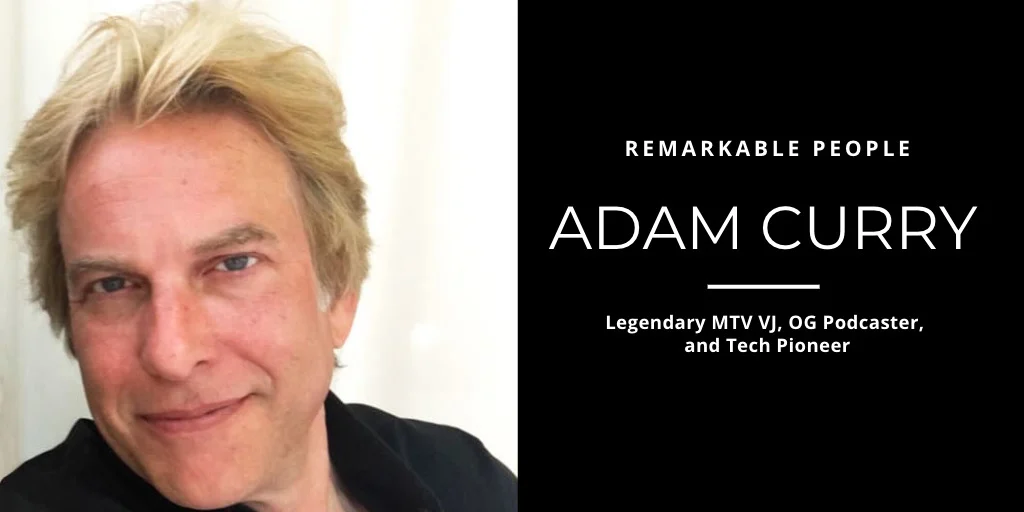
If Dave Winer is the "technical father" of podcasting, Adam Curry is its "evangelical father."
Adam Curry, born in 1964 in Arlington, Virginia, spent much of his childhood in Europe due to his father's diplomatic career. In 1987, he joined MTV. With his handsome looks and lively hosting style, he quickly became one of the network's most popular VJs. During MTV's golden age, his face appeared on the television screens of hundreds of millions of young people worldwide.
Curry left MTV in 1994 to explore the possibilities of the internet. He founded an internet company in the Netherlands and became an early user of Dave Winer's blogging software. The two connected online and began discussing the potential for audio distribution on the web.
In October 2003, at the first BloggerCon held at Harvard University, developer Kevin Marks demonstrated a script that could automatically download <enclosure> audio files from RSS feeds, transfer them into iTunes, and sync them to an iPod.
Inspired by this, Adam Curry took immediate action after the conference. He offered a script called iPodder on his blog for readers to download. This tool solved the biggest pain point of audio distribution: users no longer had to sit in front of a computer and click a webpage to listen. Audio files could be downloaded automatically in the background and synced to an iPod.
The combination of "iPod + Broadcast" birthed an entirely new medium.
3.3 Where Did the Word "Podcast" Come From?
In February 2004, British journalist and technology writer Ben Hammersley published an article in The Guardian titled "Audible Revolution," exploring the rise of online audio. In the piece, he suggested several potential names for this nascent technology, including audioblogging, podcasting, and GuerillaMedia [14].
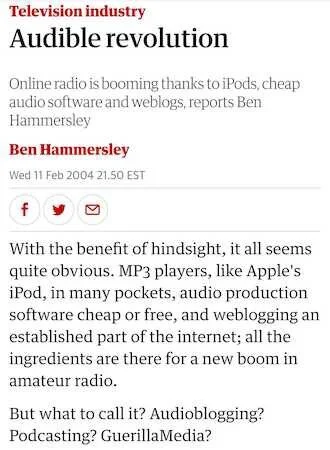 Source: benhammersley.com
Hammersley later admitted that the word "podcast" was something he suggested almost casually to pad his word count, not realizing how special it would become.
Yet, history chose this word. In September 2004, tech blogger Doc Searls used the term "podcast" in an article, and it quickly spread throughout the blogosphere.
In August 2004, Adam Curry launched his own podcast, Daily Source Code. The show not only discussed tech and played music but heavily promoted the new format of podcasting itself. Its opening monologue remains iconic: "...with a 16 million dollar jet strapped to my ass and the next generation of radio in my ears, I think I'm flying into the future."
At its peak, Daily Source Code boasted over 500,000 subscribers, earning Curry the industry moniker "The Podfather" [15].
On December 3, 2005, "podcast" was named the Word of the Year for 2005 by the New Oxford American Dictionary [16]. A new media era had officially begun.
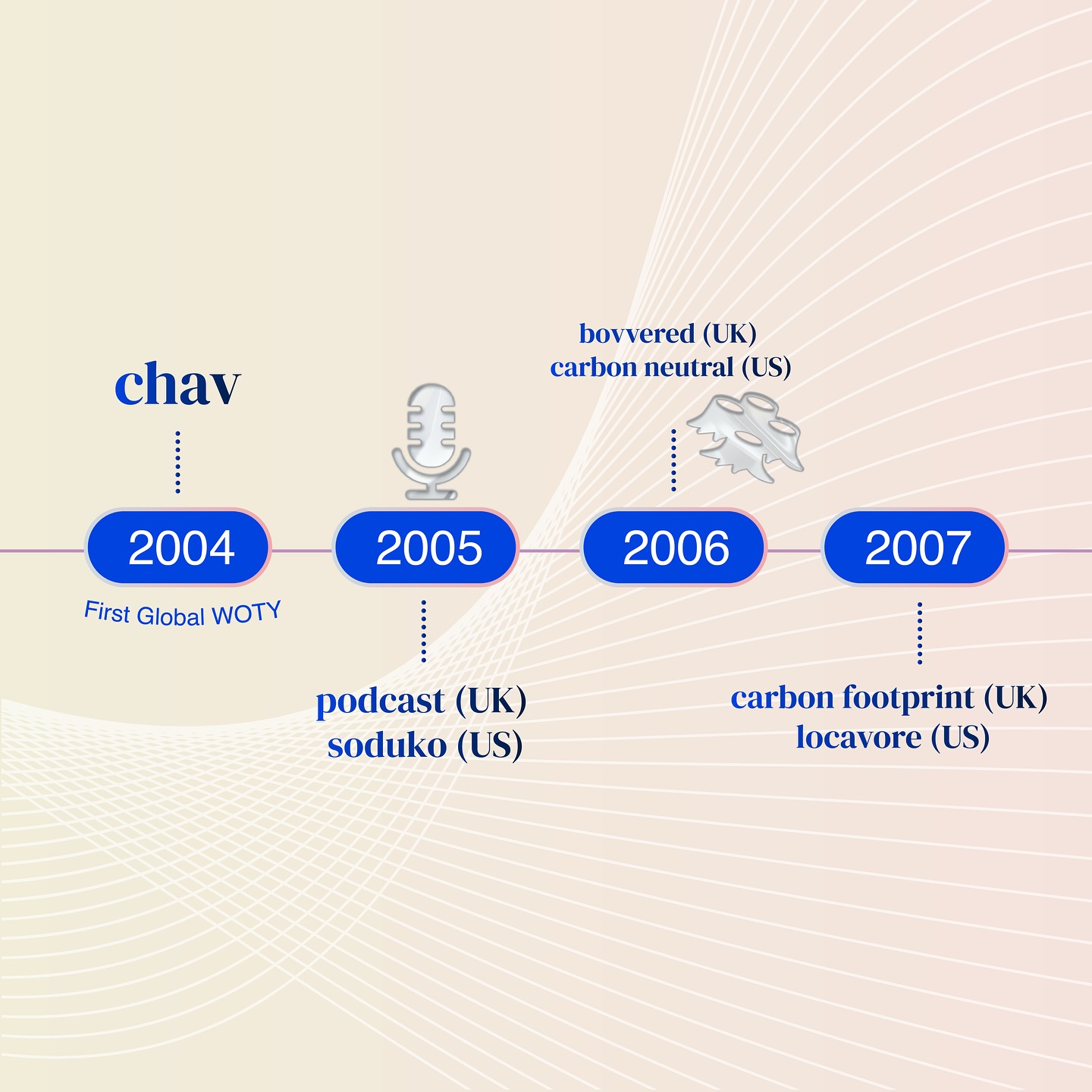 Source: Oxford University Press
3.4 The Technical Foundation: RSS 2.0 + <enclosure>
Understanding the history of RSS makes it clear why podcasting was built on RSS 2.0 rather than RSS 1.0 or Atom.
The reason is simple: The <enclosure> tag was introduced by Dave Winer in RSS 0.92, which was the direct predecessor to RSS 2.0. RSS 1.0 never supported the <enclosure> tag, and Atom wasn't published until 2005, by which time podcasting was already flourishing on the foundation of RSS 2.0.
This is the serendipity of history: an XML tag that was almost entirely ignored in 2001 became the technical bedrock of a new medium three years later.
Chapter 4: Apple Enters the Game and the Namespace Melee (2005–2010)
As podcasting exploded in popularity, the basic RSS 2.0 specification quickly proved inadequate.
RSS 2.0 could only provide a title, description, and audio download URL. For a professional audio show, this was far from enough: How do you define high-quality cover art? How do you distinguish between seasons and episodes? How do you provide detailed show notes? How do you flag explicit content?
This is where the "namespace" mechanism Dave Winer introduced proved its immense value. Major platforms utilized this "plugin interface" to roll out their own extension tags.
4.1 Apple's Dominion: The Birth of the itunes: Namespace
In June 2005, at Apple's WWDC, Steve Jobs personally demonstrated iTunes 4.9 on stage. Apple officially integrated podcasting into iTunes and launched a massive podcast directory [17].
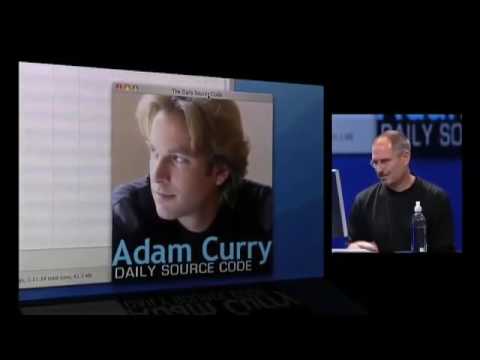 Source: @MacMuzeum Youtube
Jobs pitched it to the audience as the hottest thing in radio, the next generation of broadcasting where users could subscribe to thousands of free shows that would automatically sync to their iPods.
Within just two days of the iTunes 4.9 release, the iTunes podcast directory received over one million subscriptions. Apple's entry not only brought podcasting to the masses but also positioned Apple as the de facto standard-setter for the medium.
To ensure iTunes could perfectly display podcast metadata, Apple introduced the http://www.itunes.com/dtds/podcast-1.0.dtd namespace. It defined a series of tags prefixed with itunes::
<rss version="2.0" xmlns:itunes="http://www.itunes.com/dtds/podcast-1.0.dtd">
  <channel>
    <title>Planet Money</title>
    <link>https://www.npr.org/podcasts/510289/planet-money</link>
    <description>The economy explained.</description>
    <itunes:author>NPR</itunes:author>
    <itunes:image href="https://media.npr.org/assets/img/podcast-cover.jpg"/>
    <itunes:category text="Business">
      <itunes:category text="Investing"/>
    </itunes:category>
    <itunes:explicit>false</itunes:explicit>
    <item>
      <title>Episode 1000: The Final Episode</title>
      <itunes:duration>3600</itunes:duration>
      <itunes:episodeType>full</itunes:episodeType>
      <itunes:season>1</itunes:season>
      <itunes:episode>1000</itunes:episode>
      <enclosure url="https://feeds.npr.org/ep1000.mp3" length="57600000" type="audio/mpeg"/>
    </item>
  </channel>
</rss>
Core tags defined by the itunes: namespace include:
| Tag | Description | Applicable Level |
|---|---|---|
<itunes:author> | Show author/host name | Channel, Item |
<itunes:image> | Cover art URL | Channel, Item |
<itunes:category> | Show category (supports nested subcategories) | Channel |
<itunes:explicit> | Contains adult content (true/false) | Channel, Item |
<itunes:duration> | Audio length (seconds or HH:MM:SS) | Item |
<itunes:episodeType> | Episode type (full/trailer/bonus) | Item |
<itunes:season> | Season number | Item |
<itunes:episode> | Episode number | Item |
<itunes:title> | Episode title (overrides <title>) | Item |
<itunes:summary> | Episode summary (deprecated in favor of <description>) | Channel, Item |
<itunes:keywords> | Keywords (deprecated) | Channel, Item |
<itunes:new-feed-url> | New address when migrating RSS feeds | Channel |
<itunes:block> | Prevents show from appearing in Apple Podcasts | Channel, Item |
<itunes:complete> | Marks a show as concluded | Channel |
Due to Apple's absolute dominance in the podcast space (for a long time, Apple Podcasts accounted for over 50% of global podcast listening), the itunes: tags became the de facto industry standard. Today, if a podcast hosting platform does not support itunes: tags, its shows will fail to display properly in the vast majority of podcast clients.
4.2 content:encoded: The Savior of HTML Content
Outside the itunes: namespace, another tag commonly found in podcast RSS feeds is <content:encoded>.
This tag originated from the Content module (http://purl.org/rss/1.0/modules/content/) defined by the RSS-DEV Working Group during the RSS 1.0 era. Its purpose is to provide full HTML content for an RSS entry, compensating for the fact that the basic <description> tag is generally limited to plain text (or escaped HTML).
In podcasts, <content:encoded> is typically used to provide detailed show notes, complete with hyperlinked text, embedded images, and timestamp lists:
<content:encoded><![CDATA[
  <h2>In This Episode</h2>
  <p>Today we are joined by...</p>
  <h3>Timestamps</h3>
  <ul>
    <li><strong>00:00</strong> - Intro</li>
    <li><strong>05:30</strong> - Guest Interview</li>
    <li><strong>45:00</strong> - Q&A</li>
  </ul>
  <p>Links: <a href="https://example.com">Click here</a></p>
]]></content:encoded>
The CDATA marker tells the XML parser: "The < and > symbols inside this section are HTML tags, not XML tags. Do not parse them."
4.3 atom:link: The Feed's Self-Declaration
In modern podcast RSS feeds, you will almost always see a line like this:
<atom:link href="https://feeds.example.com/podcast.xml" rel="self" type="application/rss+xml"/>This <atom:link rel="self"> tag comes from the Atom namespace. Its function is to allow the RSS feed to declare its own "canonical URL."
This has a highly practical application: when a podcast hosting platform migrates servers or changes domain names, subscribers' clients can use this tag to automatically update the feed address without requiring users to manually resubscribe.
4.4 dc: (Dublin Core): The Legacy of Library Science
Dublin Core is a set of metadata standards maintained by the Dublin Core Metadata Initiative (DCMI), originally proposed at a 1995 conference in Dublin, Ohio. Its design goal was to provide a simple, universal metadata vocabulary for digital resources.
In podcast RSS, the Dublin Core namespace (http://purl.org/dc/elements/1.1/) is primarily used to provide standardized author and copyright information:
<dc:creator>John Doe</dc:creator>
<dc:publisher>Example Media</dc:publisher>
<dc:rights>Copyright 2024 Example Media. All rights reserved.</dc:rights>
<dc:language>en-US</dc:language>
While itunes:author already provides author information, some legacy RSS readers and podcast clients still rely on dc:creator to identify the author. Consequently, some hosting platforms prioritize compatibility by outputting both tags.
4.5 media: (Media RSS): Yahoo's Multimedia Extension
Media RSS is an RSS extension namespace proposed by Yahoo in 2004, specifically designed to describe multimedia content (images, audio, video). Its prefix is typically media:, and its URI is http://search.yahoo.com/mrss/.
In podcast RSS, the media: namespace is mainly used to provide fallback cover art and media descriptions:
<media:content url="https://example.com/ep1.mp3" type="audio/mpeg" medium="audio" duration="3600">
  <media:title>Episode 1: Getting Started</media:title>
  <media:description>In this episode, we discuss...</media:description>
  <media:thumbnail url="https://example.com/ep1-cover.jpg" width="1400" height="1400"/>
</media:content>
While the media: namespace is more common in video podcasting, modern hosting platforms (like Simplecast) often include media: tags in their audio feeds to maximize compatibility across various aggregators.
4.6 The Golden Age of Google Reader and the Decline of RSS
In 2005, Google launched Google Reader, a web-based RSS aggregator. Its emergence pushed RSS usage out of geek circles and into the broader mainstream.
At its peak, Google Reader boasted tens of millions of active users and was the most important RSS aggregation platform globally. Many people opened Google Reader every morning, just like a newspaper, to browse blogs and news from around the world.
However, in March 2013, Google suddenly announced it would shut down Google Reader on July 1 of that year. This decision stunned the internet.
Google's official reason was a "decline in usage," but many believed the true motive was Google's desire to funnel users into its Google+ social network. The open nature of RSS fundamentally conflicted with Google's strategy of building a walled garden.
The demise of Google Reader is widely viewed as the symbolic start of RSS's decline. However, its impact on podcasting was relatively limited—because podcast clients (like Pocket Casts and Overcast) did not rely on Google Reader; they parsed RSS feeds directly.
Chapter 5: In-Depth Analysis of Three Typical RSS Feed Styles
Having traced the history of RSS and its various namespaces, let's return to our initial question: why do RSS feed formats differ so much between podcasts?
By conducting an in-depth analysis of three real-world RSS feeds—NPR (Planet Money), Simplecast (The Daily), and an independent site (Syntax.fm)—we can clearly identify three distinct "schools" of formatting.
5.1 The Traditional Media School (NPR / Planet Money Style)
Namespace Combination: rss + itunes + content
NPR (National Public Radio) is one of the most influential public media organizations in the US, and Planet Money is one of the world's most popular economics podcasts.
NPR's RSS feed represents the typical approach of traditional media organizations: minimalism and strict adherence to standards.
Characteristics of this type of feed:
- Few namespaces (usually only
itunesandcontent), clear structure, easy to parse. - Strict adherence to Apple's
itunes:namespace specifications, ensuring perfect display in Apple Podcasts. - Use of
<content:encoded>to provide detailed HTML show notes. - Absence of non-standard custom tags.
Behind NPR's minimalist style is a powerful technical team and a strict quality control system. They don't need to use various namespaces to "patch" their feeds because they have the capability to maintain their own podcast infrastructure directly.
<?xml version="1.0" encoding="UTF-8"?>
<rss xmlns:itunes="http://www.itunes.com/dtds/podcast-1.0.dtd"
     xmlns:content="http://purl.org/rss/1.0/modules/content/"
     version="2.0">
  <channel>
    <title>Planet Money</title>
    <link>https://www.npr.org/podcasts/510289/planet-money</link>
    <description>The economy explained. Imagine you could call up a friend...</description>
    <language>en</language>
    <copyright>Copyright 2024 NPR</copyright>
    <itunes:author>NPR</itunes:author>
    <itunes:image href="https://media.npr.org/assets/img/2022/09/23/pm_podcasttile_sq-...jpg"/>
    <itunes:category text="Business">
      <itunes:category text="Investing"/>
    </itunes:category>
    <itunes:explicit>false</itunes:explicit>
    <item>
      <title>Episode 1000: The Final Episode</title>
      <description>Short plain-text description here.</description>
      <content:encoded><![CDATA[<p>Full HTML content with links...</p>]]></content:encoded>
      <pubDate>Mon, 01 Jan 2024 05:00:00 +0000</pubDate>
      <enclosure url="https://feeds.npr.org/510289/ep1000.mp3" length="57600000" type="audio/mpeg"/>
      <guid isPermaLink="false">https://www.npr.org/2024/01/01/episode-1000</guid>
      <itunes:duration>3600</itunes:duration>
      <itunes:episodeType>full</itunes:episodeType>
    </item>
  </channel>
</rss>
5.2 The Modern Hosting Platform School (Simplecast / The Daily Style)
Namespace Combination: rss + itunes + atom + content
Simplecast is a hosting platform aimed at professional podcast creators; it hosts The New York Times' flagship podcast, The Daily.
Simplecast's RSS feed represents the typical approach of modern professional hosting platforms: inclusive and comprehensive.
Compared to NPR, Simplecast's feed adds two namespaces:
atom:link rel="self": Declares the authoritative URL of the feed, allowing clients to automatically update if the feed address changes.- Richer use of
itunes:tags, including<itunes:season>and<itunes:episode>to distinguish seasons and episodes.
<?xml version="1.0" encoding="UTF-8"?>
<rss version="2.0"
     xmlns:itunes="http://www.itunes.com/dtds/podcast-1.0.dtd"
     xmlns:atom="http://www.w3.org/2005/Atom"
     xmlns:content="http://purl.org/rss/1.0/modules/content/">
  <channel>
    <title>The Daily</title>
    <atom:link href="https://feeds.simplecast.com/54nAGcIl" rel="self" type="application/rss+xml"/>
    <link>https://www.nytimes.com/column/the-daily</link>
    <description>This is what the news should sound like.</description>
    <itunes:author>The New York Times</itunes:author>
    <itunes:image href="https://image.simplecastcdn.com/...jpg"/>
    <itunes:category text="News">
      <itunes:category text="Daily News"/>
    </itunes:category>
    <item>
      <title>The Biggest Story of the Year</title>
      <description>Plain text description.</description>
      <content:encoded><![CDATA[<p>Full HTML show notes...</p>]]></content:encoded>
      <pubDate>Mon, 01 Jan 2024 10:00:00 +0000</pubDate>
      <enclosure url="https://cdn.simplecast.com/audio/...mp3" length="34560000" type="audio/mpeg"/>
      <guid isPermaLink="false">https://www.nytimes.com/2024/01/01/podcasts/the-daily/...</guid>
      <itunes:duration>2160</itunes:duration>
      <itunes:episodeType>full</itunes:episodeType>
    </item>
  </channel>
</rss>
5.3 The Independent Geek School (Syntax.fm / Transistor Style)
Namespace Combination: rss + itunes + content + dc
Syntax.fm is a tech podcast hosted by Wes Bos and Scott Tolinski, focusing on web development. It is hosted on the Transistor platform and represents the typical approach of independent creators and tech geeks: flexible customization and embracing the cutting edge.
Compared to the previous two, Syntax.fm's feed has several unique features:
- Use of
dc:creator: In addition toitunes:author, it provides the Dublin Core author tag for compatibility with more parsers. - Richer Show Notes: The
<content:encoded>section contains detailed chapter timestamps and related links, fully utilizing the expressive power of HTML. - Aggressive Adoption of New Standards: The Transistor platform offers robust support for new tags from Podcasting 2.0.
<?xml version="1.0" encoding="UTF-8"?>
<rss version="2.0"
xmlns:itunes="http://www.itunes.com/dtds/podcast-1.0.dtd"
xmlns:content="http://purl.org/rss/1.0/modules/content/"
xmlns:dc="http://purl.org/dc/elements/1.1/">
<channel>
<title>Syntax - Tasty Web Development Treats</title>
<link>https://syntax.fm</link>
<description>Full Stack Developers Wes Bos and Scott Tolinski...</description>
<dc:creator>Wes Bos & Scott Tolinski</dc:creator>
<itunes:author>Wes Bos & Scott Tolinski</itunes:author>
<itunes:image href="https://syntax.fm/static/logo.png"/>
<itunes:category text="Technology">
<itunes:category text="Software How-To"/>
</itunes:category>
<item>
<title>Supper Club × Building a Podcast App with Expo</title>
<content:encoded><![CDATA[
<h2>Show Notes</h2>
<p>In this episode...</p>
<h3>Timestamps</h3>
<ul>
<li>00:00 - Welcome</li>
<li>05:00 - Guest Introduction</li>
</ul>
<h3>Links</h3>
<ul>
<li><a href="https://expo.dev">Expo</a></li>
</ul>
]]></content:encoded>
<enclosure url="https://traffic.libsyn.com/syntax/...mp3" length="45000000" type="audio/mpeg"/>
<itunes:duration>2800</itunes:duration>
</item>
</channel>
</rss>5.4 Summary Comparison of the Three Schools
| Feature | NPR Style | Simplecast Style | Syntax.fm Style |
|---|---|---|---|
| Namespace Count | 2 (itunes + content) | 3 (itunes + atom + content) | 3 (itunes + content + dc) |
| atom:link | No | Yes | No/Optional |
| dc:creator | No | No | Yes |
| Show Notes Format | HTML | HTML | Detailed HTML + Timestamps |
| Use Case | Traditional Media | Pro Hosting Platforms | Independent Creators/Geeks |
| Attitude to New Standards | Conservative | Neutral | Aggressive |
Chapter 6: The Clash of Closed and Open Systems: Spotify's Ambition and the Podcasting 2.0 Renaissance (2019–Present)
Entering the 2010s, podcasting gradually evolved from a geek hobby into big business. The influx of capital began to threaten the open RSS ecosystem upon which podcasting relied.
6.1 Spotify's "Enclosure Movement"
In February 2019, streaming giant Spotify spent roughly $400 million to acquire podcast production company Gimlet Media and hosting platform Anchor [18]. Gimlet Media produced hit shows like Reply All and StartUp, while Anchor was a tool allowing anyone to create a podcast for free.
Subsequently, Spotify signed top-tier podcaster Joe Rogan to an exclusive deal reportedly worth $100 million (with some estimates later pushing it closer to $200 million) [19]. Rogan's show, The Joe Rogan Experience, had previously been an open RSS feed that any client could subscribe to. But starting in September 2020, full episodes were only available on Spotify.
Spotify's strategy was clear: use exclusive content to draw listeners away from open RSS clients (like Apple Podcasts or Pocket Casts) and into its closed app. On the Spotify platform, a podcast was no longer a freely downloadable MP3 file; it was a stream locked behind DRM (Digital Rights Management).
This "enclosure movement" alarmed many podcast veterans who championed the open web. The author of the blog Beard.fm even published an article titled "Spotify is Killing Podcasting," arguing that Spotify's closed strategy was eroding the medium's open foundation.
However, the story did not end in worst-case scenario. In 2024, Spotify announced the end of its exclusive deal with Joe Rogan, and his show returned to an open RSS feed. Spotify's "exclusive podcast" strategy, after costing hundreds of millions of dollars, ultimately ended in failure.
6.2 Apple's Monopoly and Standard Stagnation
Unlike Spotify's aggressive expansion, Apple's influence on the podcast ecosystem has been more subtle, yet more profound.
Through the itunes: namespace, Apple effectively controlled the power to set podcast standards. Any new feature requirement had to wait for Apple to update its specifications before gaining widespread support. Yet Apple's attitude toward podcasting has long been lukewarm—it didn't invest massively like Spotify, but it also refused to relinquish control over the standard.
The biggest problem caused by this monopoly was stagnation. Many features desperately needed by creators and developers—such as standardized transcripts, detailed chapter info, and direct tipping capabilities—were continually ignored by Apple.
6.3 The Grandfathers Strike Back: The Birth of Podcasting 2.0
In the summer of 2020, two podcasting pioneers, Adam Curry and Dave Jones, decided to take action once again.
They launched the Podcasting 2.0 movement and built a completely open-source, decentralized podcast directory: the Podcast Index [20]. The goal of the Podcast Index was to provide a database uncontrolled by any single corporation, free for any developer to use.
More importantly, they introduced the brand-new podcast: namespace (https://podcastindex.org/namespace/1.0). The design principle behind this namespace was 100% backward compatibility with existing RSS feeds. Any podcast could gradually add new podcast: tags without breaking current subscriptions.
6.4 Deep Dive into Core podcast: Namespace Tags
The podcast: namespace currently contains dozens of tags covering all aspects of podcast creation. Here are the most important ones:
<podcast:transcript>: Transcripts
<podcast:transcript url="https://example.com/ep1.srt" type="application/srt"/>
<podcast:transcript url="https://example.com/ep1.json" type="application/json" language="en-US"/>
This tag allows podcasts to provide standardized transcript links, supporting formats like SRT, VTT, and JSON. For the hearing impaired, this vastly improves accessibility; for search engines, it makes podcast content indexable and searchable.
<podcast:chapters>: Chapters
<podcast:chapters url="https://example.com/ep1-chapters.json" type="application/json+chapters"/>This tag points to a JSON file containing chapter information for the episode, including titles, start times, cover art, and links. Podcasting 2.0-compatible clients (like Fountain or Pocket Casts) can display chapter lists on the playback screen, allowing listeners to jump directly to sections of interest.
<podcast:person>: Personnel Information
<podcast:person role="host" img="https://example.com/host.jpg" href="https://example.com/host">
  John Doe
</podcast:person>
<podcast:person role="guest" img="https://example.com/guest.jpg">
  Jane Smith
</podcast:person>
This tag meticulously details everyone involved in the show (hosts, guests, editors, producers, etc.) and can include their avatars and personal homepage links.
<podcast:soundbite>: Highlights
<podcast:soundbite startTime="73.0" duration="60.0">
  The most interesting part of the interview
</podcast:soundbite>
This tag marks highlight clips within the show, making it easier for platforms and clients to generate preview content.
<podcast:value>: Value4Value Tipping
This is perhaps the most revolutionary tag in Podcasting 2.0. It supports Bitcoin micropayments via the Lightning Network, allowing listeners to "stream" tips to hosts in real-time based on listening duration (Value4Value) [21].
<podcast:value type="lightning" method="keysend" suggested="0.00000015000">
  <podcast:valueRecipient name="Host" type="node" address="02d5c1..." split="90"/>
  <podcast:valueRecipient name="Editor" type="node" address="03a8b7..." split="10"/>
</podcast:value>
This model attempts to break the traditional advertising monetization path, allowing creators to earn revenue directly from listeners. On supported clients (like Fountain), listeners can stream tips to the host at a rate of a few Satoshis (the smallest unit of Bitcoin) per minute while listening.
<podcast:location>: Geolocation
<podcast:location geo="geo:37.786971,-122.399677" osm="R7444">San Francisco, CA</podcast:location>This tag marks the geographical location of the show, making it easier for location-relevant podcasts (like city tourism or local news shows) to be discovered.
<podcast:guid>: Globally Unique Identifier
<podcast:guid>917393e3-1b1e-5cef-ace4-edaa54e1f810</podcast:guid>This tag provides a globally unique UUID for the podcast, ensuring that even if the feed URL changes, the podcast's identity is not lost. This is crucial for maintaining subscription continuity when migrating hosting platforms.
6.5 Current Adoption of Podcasting 2.0
As of 2024, various Podcasting 2.0 tags have gained increasingly widespread support:
| Category | Support Status |
|---|---|
| Podcast Clients | Fountain, Pocket Casts, Overcast (partial), Podverse, Castamatic |
| Hosting Platforms | Buzzsprout, Captivate, Podbean (partial), Transistor (partial) |
| Directories | Podcast Index, Apple Podcasts (partial, e.g., transcript) |
| No Support | Spotify (completely unsupported), Apple Podcasts (only supports a few tags) |
Notably, Apple began supporting the <podcast:transcript> tag in 2023, marking a significant milestone in the adoption of Podcasting 2.0 standards by mainstream platforms.
Chapter 7: The Unique Landscape of the Chinese Podcast Ecosystem
Against the backdrop of the global podcast ecosystem, the development of Chinese podcasts has forged a unique path.
7.1 Early Dominance of Closed Ecosystems
Due to restricted access to Apple Podcasts in China and the absence of Spotify, local audio platforms like Ximalaya, Lizhi, and Qingting FM emerged.
Early on, these platforms primarily adopted a closed, centralized distribution model. Creators had to manually upload audio, and users could only listen within specific apps. They were closer to "internet radio" than true "podcasts"—because they did not provide RSS feeds, listeners could not subscribe using universal podcast clients.
Ximalaya was one of the most successful platforms of this era. It not only provided free content but also launched paid columns, thoroughly validating the concept of "paying for knowledge" in China's audio sector.
7.2 The Rise of Xiaoyuzhou: Balancing Openness and Enclosure
In March 2020, the Xiaoyuzhou (Little Universe) App officially launched, becoming China's first true podcast client [22].
Xiaoyuzhou's emergence separated "podcasts" from "internet radio": it fully supported RSS subscriptions, allowing users to subscribe to any podcast via an RSS feed. Simultaneously, it provided a content hosting platform, enabling creators to publish shows directly on Xiaoyuzhou.
Xiaoyuzhou's innovation lay in combining the open RSS ecosystem with localized community operations:
- Timestamp-based Comments: Listeners can leave comments at any specific timestamp in an episode, visible to the host and other listeners. This type of interaction is almost non-existent on Western podcast platforms.
- In-Show Interaction: Listeners can mark shows with statuses like "want to listen," "listening," or "listened," forming a podcast rating and recommendation system similar to Douban.
- Creator Tools: Xiaoyuzhou provides creators with detailed data analytics tools to help them understand listener behavior.
7.3 The Special Plight of RSS in China
However, RSS faces unique challenges in China.
In 2020, Apple removed several RSS reader apps from the Chinese App Store, citing that these applications could be used to access "uncensored content." This event made Chinese RSS users acutely aware of the fragility of the open web.
For podcast creators, the importance of the RSS feed lies in its provision of a "censorship-resistant" content distribution mechanism. As Afra Wang, founder of the Chinese podcast Loud Murmurs, noted: "When my show was deleted on Ximalaya, I lost thousands of subscribers and all interaction records. But because we had an RSS feed, the show's content could still be accessed through other clients."
This story vividly illustrates the significance of RSS's openness for content creators: it is a content distribution mechanism that does not rely on any single platform, serving as the creator's last line of defense against platform risk.
Chapter 8: JSON Feed and the Future of Podcasting
While XML namespaces continue to expand, another technological current is surging.
8.1 JSON Feed: The Modern Developer's Choice
Though XML was once the king of data exchange, JSON is the absolute mainstream in modern web development. JSON syntax is cleaner, easier for JavaScript to process, and aligns better with modern API design.
In 2017, Manton Reece and Brent Simmons published the JSON Feed specification, aiming to rewrite RSS/Atom in JSON format [23].
A simple JSON Feed looks like this:
{
  "version": "https://jsonfeed.org/version/1.1",
  "title": "My Example Podcast",
  "home_page_url": "https://example.com",
  "feed_url": "https://example.com/feed.json",
  "description": "An example podcast feed in JSON format",
  "items": [
    {
      "id": "https://example.com/episode1",
      "url": "https://example.com/episode1",
      "title": "Episode 1: Getting Started",
      "content_html": "<p>Full HTML content here.</p>",
      "date_published": "2024-01-01T00:00:00Z",
      "attachments": [
        {
          "url": "https://example.com/ep1.mp3",
          "mime_type": "audio/mpeg",
          "size_in_bytes": 12345678,
          "duration_in_seconds": 3600
        }
      ]
    }
  ]
}
Compared to XML, the advantages of JSON Feed are obvious:
- No need to deal with the complexity of XML namespaces.
- No need for CDATA to wrap HTML content.
- Much friendlier for JavaScript developers.
- File sizes are typically smaller.
However, the adoption rate of JSON Feed in the podcasting space remains very low. The primary reason: the existing podcast ecosystem (clients, hosting platforms, directories) is entirely built around RSS 2.0, making migration costs astronomically high.
8.2 The Video Podcast Challenge
Another challenge facing podcast RSS is the rise of video podcasts.
Platforms like YouTube and Spotify are heavily promoting video podcasts, but these platforms usually do not output standard RSS feeds for video content. While the <enclosure> tag technically supports video files (e.g., type="video/mp4"), video files are massive, and traditional podcast hosting platforms struggle to bear the bandwidth costs.
Consequently, video podcasts are increasingly trending toward closed platforms, presenting a new challenge to the open RSS ecosystem.
Chapter 9: Practical Guide for Creators
If you are a podcast creator, how should you navigate this complex RSS ecosystem? Here are some practical recommendations:
9.1 Essential Tags You Must Configure
No matter which hosting platform you use, ensure the following tags are correctly configured:
<title>and<itunes:title>: Must be concise and clear; do not stuff them with keywords.<itunes:image>: Must be a high-quality square image (recommended 3000x3000px), otherwise Apple Podcasts may reject it.<itunes:category>: Choose the most accurate category, as this directly affects your show's discoverability.<itunes:explicit>: Accurately mark adult content; false reporting can lead to the show being removed.
9.2 Common RSS Errors to Avoid
- Invalid XML Syntax: E.g., unescaped
&characters. Always use&or wrap content inCDATA. - Missing
<guid>: Every episode must have a unique ID; otherwise, clients may repeatedly download the same episode or fail to recognize new ones. - Incorrect Audio MIME Type: The
typeattribute in<enclosure>must beaudio/mpeg(for MP3) oraudio/x-m4a(for M4A). - Oversized Feed File: If your show has hundreds of episodes, the RSS file can become very large. Ensure your server supports GZIP compression.
9.3 Choosing a Hosting Platform
- If you value Apple ecosystem compatibility: Choose traditional platforms like Libsyn or Blubrry.
- If you want to embrace Podcasting 2.0: Choose platforms like Transistor or Buzzsprout.
- If your primary audience is in China: Xiaoyuzhou's hosting service is the most convenient choice, but it's recommended to simultaneously back up to an overseas platform to ensure RSS independence.
Chapter 10: Conclusion
From the portal wars of 1999 to the Podcasting 2.0 renaissance of 2024, the podcast RSS feed has traversed a quarter-century of history.
It survived the collapse of Netscape, endured the brutal RSS split wars, weathered the closure of Google Reader, and resisted the enclosure movements of giants like Spotify.
Why is a simple XML format so resilient?
Because it represents the original spirit of the internet: Decentralization, Openness, and Freedom.
In the RSS ecosystem, no single company can dictate what you can or cannot listen to. You own your subscription list, and creators own their audiences. It is a bridge built on code, connecting creators and listeners directly, bypassing the gatekeepers.
The next time you open your podcast app and hit play, take a moment to remember: the voice flowing into your ears is traveling across a bridge built twenty-five years ago by a group of stubborn, idealistic geeks.
Appendix: Podcast RSS History Timeline
- 1997: Dave Winer creates the Scripting News XML format.
- 1999: Netscape releases RSS 0.90, then adopts Winer's ideas for RSS 0.91.
- 2000: RSS-DEV Working Group (including 14-year-old Aaron Swartz) releases the RDF-based RSS 1.0. Dave Winer introduces the
<enclosure>tag in RSS 0.92. - 2002: Dave Winer releases RSS 2.0 (Really Simple Syndication).
- 2003: Atom project begins; Winer freezes the RSS 2.0 spec. Adam Curry launches the iPodder script.
- 2004: Ben Hammersley suggests the term "podcasting" in The Guardian. Adam Curry launches Daily Source Code.
- 2005: Apple integrates podcasts into iTunes 4.9, establishing the
itunes:namespace. "Podcast" named Word of the Year by the New Oxford American Dictionary. - 2013: Google Reader shuts down; Aaron Swartz passes away.
- 2019: Spotify begins acquiring podcast companies, launching exclusive content strategies.
- 2020: Adam Curry and Dave Jones launch Podcasting 2.0 and the
podcast:namespace. Xiaoyuzhou App launches in China. - 2024: Spotify ends Joe Rogan exclusivity, returning the show to open RSS.
References
[1] W3C. (1999). RDF Site Summary (RSS) 0.9. [2] Wikipedia. Dave Winer. [3] Two-Bit History. (2018). The Rise and Demise of RSS. [4] Netscape. (1999). RSS 0.91 Spec. [5] Libby, D. (1999). RSS 0.91 Specification - RDF references removed. [6] Two-Bit History. (2018). The Rise and Demise of RSS. [7] Wikipedia. Aaron Swartz. [8] Winer, D. (2002). RSS 2.0 Specification. [9] Wikipedia. History of web syndication technology. [10] Winer, D. (2000). Syndication mailing list archive. [11] Wikipedia. History of web syndication technology. [12] Atom Project. (2003). Project Road Map. [13] Winer, D. (2001). Scripting News. [14] Hammersley, B. (2004). Audible Revolution. The Guardian. [15] Wikipedia. History of podcasting. [16] Oxford University Press. (2005). Word of the Year 2005. [17] Apple Inc. (2005). Apple Takes Podcasting Mainstream. [18] Spotify. (2019). Spotify to Acquire Gimlet Media and Anchor. [19] The Wall Street Journal. (2020). Spotify Strikes Podcast Deal With Joe Rogan. [20] Podcast Index. (2020). Podcasting 2.0 Namespace. [21] Value4Value. (2021). Streaming Sats. [22] Xiaoyuzhou App. (2020). Product Launch Announcement. [23] Reece, M., & Simmons, B. (2017). JSON Feed Version 1.